Paper vs Digital Prescriptions: Which Is Better for Modern Clinics?
· Online Prescription Maker
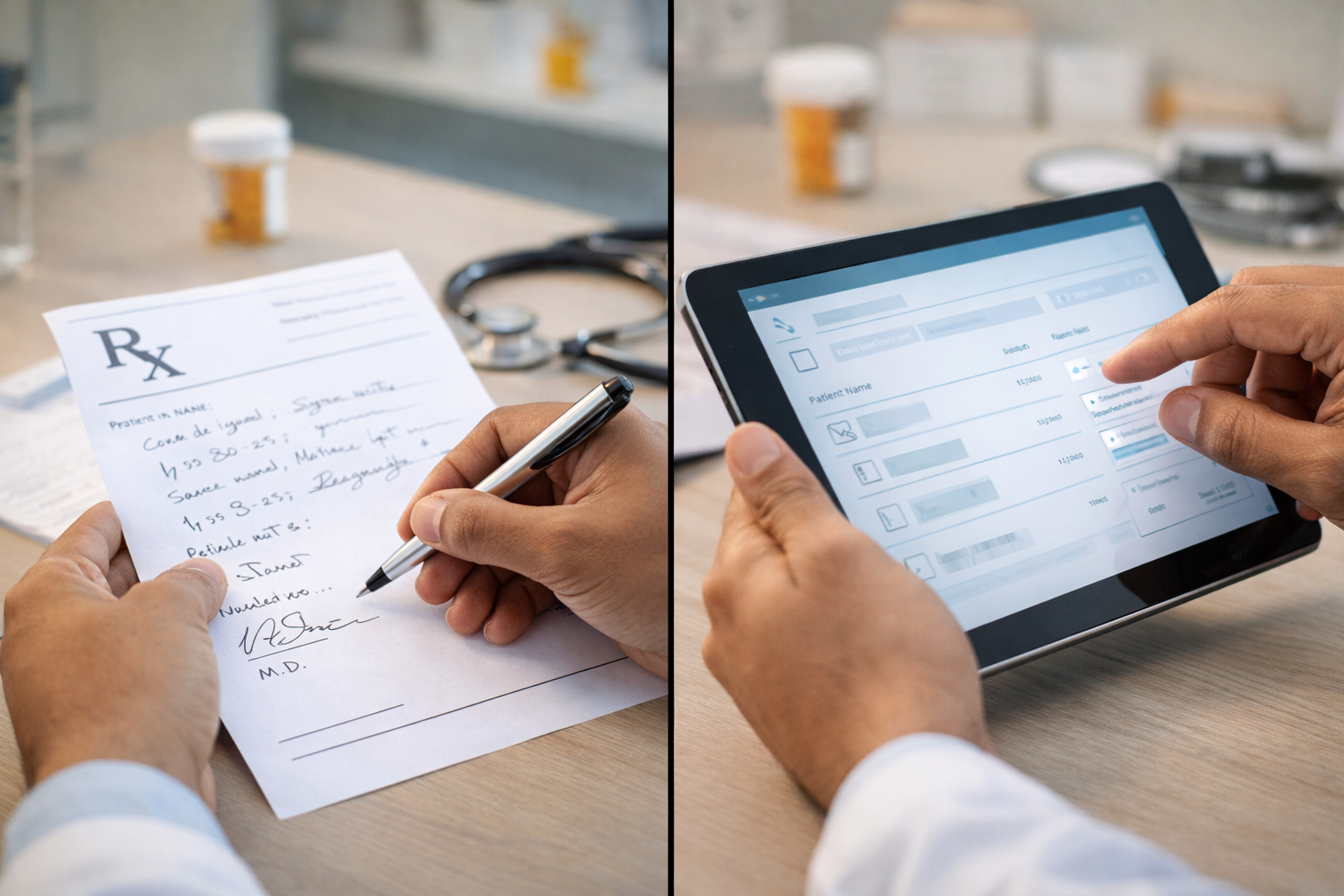
Choosing between paper and digital prescriptions is one of the most consequential decisions for modern clinics. Both methods are legally valid in India, but they differ significantly in speed, storage, compliance, error reduction, patient experience, telemedicine suitability, cost, and environmental impact. This article provides an evidence-based comparison to help clinic owners and practitioners make an informed choice aligned with regulatory requirements and patient care standards.
We compare paper and digital prescriptions across eight key dimensions, present pros and cons for each approach, and offer a clear recommendation for Indian clinics—including considerations for the National Medical Commission (NMC), Drug and Cosmetic Rules, and the growing role of telemedicine.
Paper vs Digital Prescriptions: At a Glance
The following table summarises how paper and digital prescriptions compare across the criteria that matter most for modern clinics.
| Criterion | Paper | Digital |
|---|---|---|
| Speed | Slower; handwriting and manual filing | Faster; templates, autofill, instant send |
| Storage | Physical files; space and retrieval limits | Cloud/local; searchable, scalable |
| Legal compliance | Valid if signed; record-keeping manual | Valid with e-sign; automated audit trail |
| Error reduction | Higher risk of illegibility and omissions | Lower risk; structured fields, alerts |
| Patient experience | Single copy; can be lost or damaged | Multiple copies; SMS/email/print; clarity |
| Telemedicine suitability | Poor; requires physical handover | Ideal; instant electronic delivery |
| Cost | Low upfront; ongoing stationery and storage | Software/subscription; saves staff time |
| Environmental impact | Paper, printing, transport, disposal | Lower; less paper and waste |
Speed
Speed affects consultation throughput and patient wait times. Paper prescriptions require writing each field by hand, which can take several minutes per prescription, especially for complex regimens. Digital systems use templates, prefilled patient and drug data, and one-click signing, cutting prescription creation time significantly and allowing more consultations per day.
Paper: Pros and Cons
- Pros: No software setup; works during power or connectivity outages; familiar to all staff.
- Cons: Slower per prescription; no autofill or templates; manual filing and retrieval.
Digital: Pros and Cons
- Pros: Faster creation and sending; templates and drug databases; instant delivery to patient.
- Cons: Depends on device and internet; initial learning curve.
Storage
Clinics must retain prescription records for years as per Indian regulations. Paper records consume physical space, are hard to search, and are vulnerable to damage or loss. Digital storage—whether on-premise or in the cloud—allows searchable, backed-up archives that scale without additional filing space and support faster retrieval for audits or continuity of care.
Paper: Pros and Cons
- Pros: No digital infrastructure; tangible copies for legal inspection.
- Cons: Space-intensive; difficult to search; risk of loss, fire, or deterioration.
Digital: Pros and Cons
- Pros: Searchable, scalable, backup-friendly; supports long-term retention.
- Cons: Requires secure systems and access controls; vendor or infrastructure dependency.
Legal Compliance
In India, both paper and digital prescriptions are legally valid when they include mandatory elements (doctor details, registration number, patient details, diagnosis, medicines with dosage, and signature). Paper relies on handwritten signatures and manual record-keeping. Digital prescriptions are recognised under the Telemedicine Practice Guidelines and the Information Technology Act when properly authenticated with e-signatures and when records are maintained as required by NMC and state councils.
Paper: Pros and Cons
- Pros: Universally accepted; no e-signature setup; straightforward for inspectors.
- Cons: Manual maintenance of registers; harder to demonstrate audit trail.
Digital: Pros and Cons
- Pros: Automated logs; e-signature compliance; easier to produce records for audits.
- Cons: Must ensure e-sign and software meet NMC and IT Act requirements.
Error Reduction
Prescription errors can lead to adverse drug events and liability. Illegible handwriting, wrong strength or frequency, and missing instructions are more common with paper. Digital systems reduce these risks through structured fields, drug databases, dose checks, and clear print or electronic output, improving safety for patients and reducing medico-legal risk.
Paper: Pros and Cons
- Pros: Doctor can sketch or add freehand notes where needed.
- Cons: Illegibility; transcription errors; no built-in drug or dose validation.
Digital: Pros and Cons
- Pros: Legible text; dropdowns and validation; fewer dosing and spelling errors.
- Cons: Over-reliance on defaults; must still review each prescription.
Patient Experience
Patients benefit from clear, portable, and durable prescriptions. Paper gives one physical copy that can be lost, damaged, or misread at the pharmacy. Digital prescriptions can be sent via SMS, email, or WhatsApp and printed if needed, giving patients a readable copy on their phone and reducing trips back to the clinic for duplicates.
Paper: Pros and Cons
- Pros: No smartphone or email required; single copy is sufficient for many.
- Cons: Single point of failure; illegibility can confuse pharmacists and patients.
Digital: Pros and Cons
- Pros: Readable; shareable; can be stored on phone; reprints without clinic visit.
- Cons: Some patients prefer or only have paper; need basic digital access.
Telemedicine Suitability
Telemedicine requires prescriptions to be issued and delivered remotely. Paper cannot be handed to the patient during a video or phone consultation; it is unsuitable for pure telemedicine. Digital prescriptions are the standard for telemedicine under Indian guidelines: they can be created and sent electronically during the same consultation, supporting continuity of care and regulatory compliance.
Paper: Pros and Cons
- Pros: Fine for in-person-only practice.
- Cons: Cannot be used for remote consultations; no instant delivery.
Digital: Pros and Cons
- Pros: Native to telemedicine; instant delivery; supports hybrid and remote care.
- Cons: Requires reliable connectivity and compliant software.
Cost
Paper has low upfront cost (pads, printing) but ongoing expense for stationery, storage, and staff time for filing and retrieval. Digital systems involve subscription or licence fees and possibly hardware, but they reduce time per prescription and administrative burden, often paying back for busier clinics through higher throughput and fewer errors.
Paper: Pros and Cons
- Pros: Low initial cost; no subscription.
- Cons: Recurring stationery and storage costs; staff time for filing and searches.
Digital: Pros and Cons
- Pros: Less manual work; scalable; potential to see more patients.
- Cons: Upfront and recurring software costs; need for devices and connectivity.
Environmental Impact
Paper prescriptions consume trees, water, and energy for production and transport, and generate waste when discarded or replaced. Digital prescriptions reduce paper use and physical waste; the main environmental cost is from devices and data centres, which can be mitigated by choosing efficient software and responsible disposal of hardware.
Paper: Pros and Cons
- Pros: No electronic waste from prescription process.
- Cons: Ongoing paper use, printing, and disposal; higher carbon footprint per prescription.
Digital: Pros and Cons
- Pros: Less paper and waste; aligns with sustainability goals.
- Cons: Energy and e-waste from devices and servers; depends on green practices.
Recommendation for Indian Clinics
For modern clinics in India, digital prescriptions are the recommended default for most practices. They align with NMC expectations, Telemedicine Practice Guidelines, and the Drug and Cosmetic Rules when implemented with proper e-signatures and record-keeping. Digital systems improve speed, storage, compliance, error reduction, patient experience, and telemedicine readiness, and they reduce paper use and administrative burden.
Clinics that offer or plan to offer telemedicine should adopt a compliant digital prescription solution to avoid legal and operational gaps. Small or resource-constrained clinics can consider a phased move: start with a simple, affordable e-prescription tool for routine cases while retaining paper for exceptional situations (e.g. power or connectivity failure), and ensure that any digital solution uses legally recognised e-signatures and maintains an audit trail for the required retention period.
Choosing software that integrates with your existing workflow, supports Schedule H/H1 compliance, and delivers prescriptions via SMS or WhatsApp will maximise acceptance among Indian patients and pharmacists while keeping your practice legally compliant and future-ready.
Frequently Asked Questions
Are digital prescriptions legally valid in India?
Yes. Digital prescriptions are legally valid in India under the Telemedicine Practice Guidelines and the Information Technology Act when they include all mandatory details (doctor name, registration number, patient details, diagnosis, medicines with dosage, and a legally valid e-signature) and when records are maintained as required by the NMC and state medical councils.
Can I use both paper and digital prescriptions in my clinic?
Yes. Many clinics use digital prescriptions as the default and keep paper as a fallback for power outages, connectivity issues, or patient preference. Ensure both methods include all legally required elements and that you maintain consistent record-keeping for audits.
Do pharmacists accept digital prescriptions in India?
Yes. Pharmacists are permitted to dispense against digital prescriptions that are properly signed and contain the required information. Showing the prescription on a phone or providing a printed copy is widely accepted. Ensure the prescription is clearly readable and includes your registration number for Schedule H/H1 drugs.
What is the main advantage of digital over paper for telemedicine?
Digital prescriptions can be created and sent to the patient instantly during a remote consultation, which is not possible with paper. They satisfy the Telemedicine Practice Guidelines and support continuity of care without the patient having to visit the clinic in person to collect a prescription.
How do I keep digital prescription records compliant?
Use software that stores every prescription with date, time, and e-signature in an immutable audit trail. Retain records for the period required by your state council (typically 3–5 years). Ensure backups and access controls so that records are secure and available for regulatory inspection when needed.