Ophthalmology prescription template (1 page)
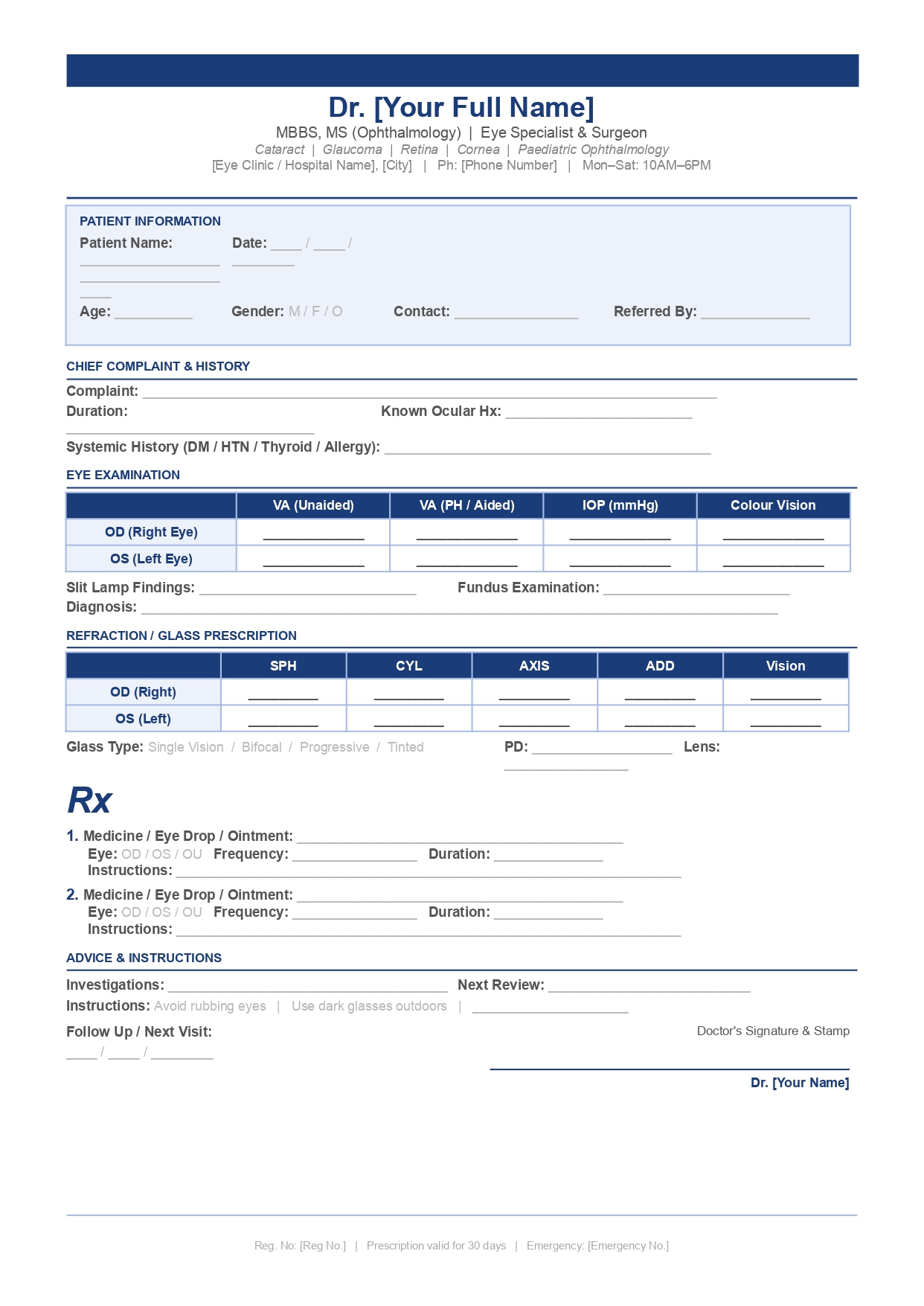
Free editable .docx for doctors and clinics in India. Use for print or PDF workflows.
Download .docxIntroduction
Eye prescriptions require OD/OS clarity, drop schedules, and post-op steroid/antibiotic plans—easy to garble on generic forms.
A one-page doctor prescription format keeps drops, ointments, and systemic drugs on a single patient-facing sheet.
Handwritten notes are still common in Indian OPDs, but they are harder to read, easier to misfile, and weaker for medico-legal clarity. A printable, editable medical prescription format helps you move toward clearer, safer documentation—whether you work on paper or toward a digital prescription India workflow.
What is a Ophthalmology Prescription Template?
This ophthalmology layout emphasizes laterality and frequency of topical therapy.
It suits Indian OPDs managing cataract, glaucoma, and uveitis follow-up in busy settings.
This layout is tuned for Ophthalmology workflows so you spend less time formatting and more time on clinical decisions.
Key Features of This Ophthalmology Prescription Template
- Patient ID and date
- Diagnosis with eye involvement (OD / OS / OU) in text
- Table suited to drops, ointments, and oral agents
- Instructions for tapering steroids or combining multiple drops
- Next visit and visual acuity or IOP review reminders
- Clear medication structure (name, strength, dose, frequency, duration, instructions)
- Space for follow-up, investigations, and patient advice
Why Doctors Should Use a Structured Prescription Format
Structured doctor prescription format reduces medication errors, unclear dosing, and illegible handwriting. In India, where medico-legal scrutiny and NMC expectations are growing, a consistent layout supports safer care and clearer documentation.
A dedicated template also reinforces prescription template India best practices: patient identification, diagnosis context, and explicit instructions for pharmacists and patients.
How to Use This Template in Your Clinic
- Download the free .docx file and open it in Microsoft Word or a compatible editor.
- Add your clinic letterhead, doctor name, degrees, and registration number in the header area.
- Complete patient demographics, vitals or specialty fields, then enter medications with dose, frequency, duration, and instructions.
- Print for the patient file or save as PDF for digital prescription India workflows (email, WhatsApp, or EHR upload).
- If you use clinic prescription software, paste or attach the same structured content so records stay aligned.
Compliance with Indian Medical Guidelines
Under NMC prescription guidelines and established practice, prescriptions should identify the prescriber (name, qualifications, registration number), patient, date, and clear drug orders with signature or recognized electronic authentication where applicable.
Avoid promotional or misleading claims on the prescription sheet. Use standard drug names where possible and document allergies and key comorbidities when relevant to safe prescribing.
Benefits of Digital Prescription Templates
- Faster repeat visits with reusable headers and layout
- Easier archiving and retrieval compared to loose handwritten slips
- Professional appearance that supports download prescription template branding
- Simple sharing with patients and caregivers when exported as PDF
Download Ophthalmology Prescription Template (1 Page)
The file is provided in Microsoft Word (.docx) format. It is fully editable and printable, so you can adapt fonts, logos, and sections to your hospital or clinic standards without losing the underlying structure.
Use the download button on this page to save the template locally. You may duplicate the file per doctor or per location while keeping one master template for quality control.
Best Practices for Writing Prescriptions
- Avoid ambiguous abbreviations for drug names and units.
- Specify route, dose, frequency, and duration for each medicine.
- Note review date or “until further review” where appropriate.
- Record known allergies and major comorbidities when they affect drug choice.
- Sign (or use an approved digital signature process) consistent with your practice policy.
Frequently Asked Questions (FAQ)
How to write “1 drop OD QID”?
Place drug in table; put OD and schedule in instructions; avoid ambiguous shorthand.
Post-cataract drops?
List antibiotic, steroid, and NSAID drops with start/stop dates in instructions.
Contact lens wearers?
Note lens-off periods during infection treatment in advice.
Pediatric drops?
Document weight or age if relevant to systemic absorption counseling.
Glaucoma timolol twice daily?
Specify morning/evening and punctal occlusion if you recommend it.
Conclusion
A specialty-aware prescription template India supports clearer communication with patients and pharmacists, better record-keeping, and a professional image for your practice. Combining this ophthalmology layout with disciplined prescribing habits positions you well whether you stay on paper or adopt fuller clinic prescription software and digital workflows.
Download the template, customize it for your setting, and use it as a stepping stone toward safer, more consistent prescriptions every day.